
Cem Ünsal
- Digital Entrepreneur
- Author
- Instructor
About
Muhafız
“Recognize threats and manipulation. Draw your boundaries. When needed, defend yourself with words and with your body.”
There was a moment. Something inside you said "something is wrong", but you couldn't explain it. Muhafız, Turkish for "guardian", is an applied mental architecture written for women. It teaches you to read a threat, draw a boundary against manipulation and act without freezing. It builds the calm strength within you.
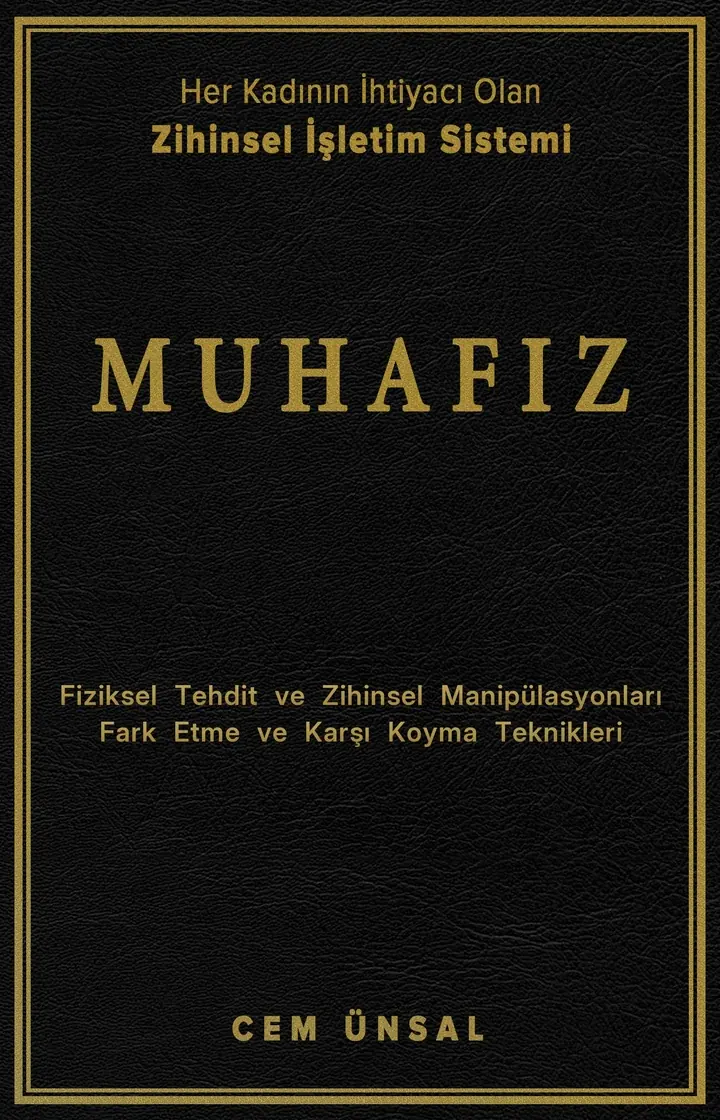
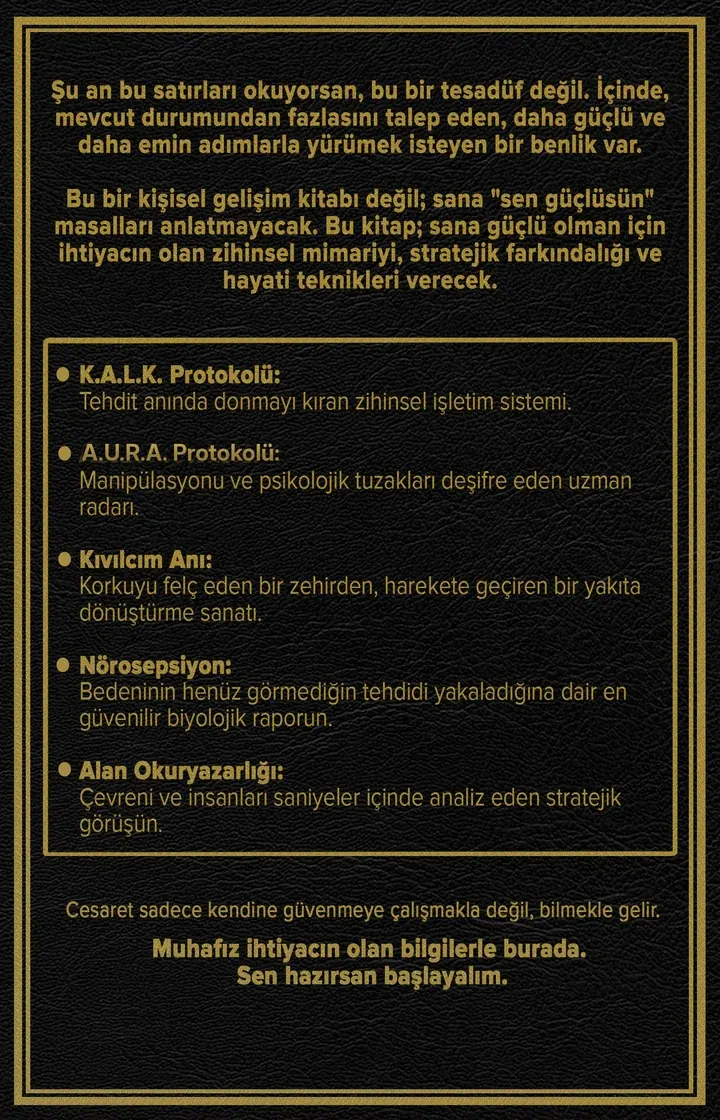

364 pages. 4 parts, 12 chapters. The most comprehensive practical guide to women's safety written in Türkiye. When you finish this book, the world outside will not have changed. You, the one looking at that world, will have changed completely.
Muhafız is complete in Turkish, and the English edition is in preparation. There is more about the book on its page.
If there are moments when you tense up for no clear reason and feel your stomach tighten,
If something inside you said "there is a problem here" and you told yourself "maybe I'm overreacting" and stayed quiet,
If you later remembered a moment when you froze, couldn't think and couldn't make a sound, and felt ashamed,
If a look or a so-called compliment made you uncomfortable, yet you put on a fake smile so as not to seem rude,
If after a conversation you felt drained, your stomach in a knot or your head in a fog,
Muhafız was written for you.
Hear the news the day the English edition of Muhafız is published. Be one of the first women whose life begins to change.
No spam. Only important updates.
Blog
Topics
Its present, its future and its limits.
- · What Is AI? A Guide From Scratch for Anyone With No Technical Background
- · What Is an AI Model Trainer? How Is an AI Actually Trained?
Read the threat, defend yourself.
- · The 8 Faces of Threat and How to Spot the Manipulator, the Despot and the Street Predator
- · The 5 Most Insidious Manipulation Tactics in Relationships and How to Counter Them
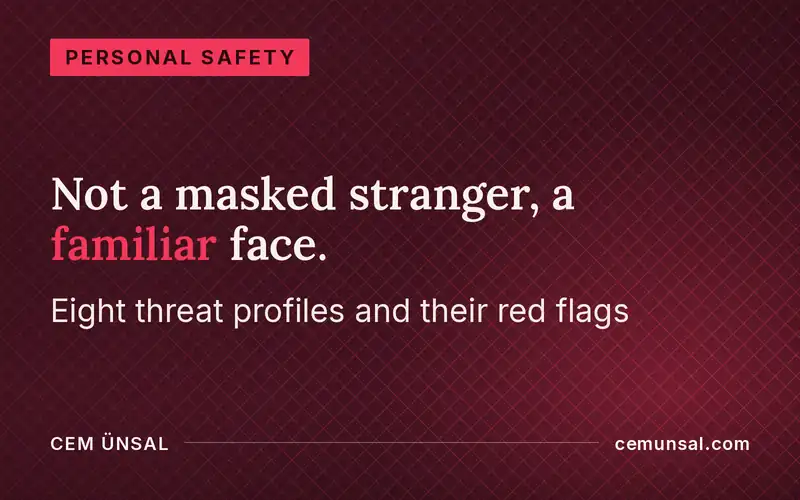
The 8 Faces of Threat and How to Spot the Manipulator, the Despot and the Street Predator
A manipulator or a dangerous person is usually a familiar face. Learn the 8 faces of threat, their red flags and how to read behavior with A.U.R.A., with concrete defenses.
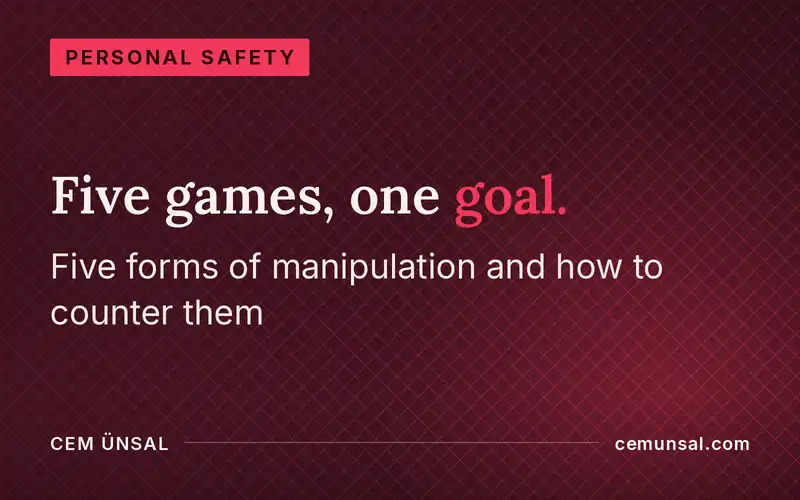
The 5 Most Insidious Manipulation Tactics in Relationships and How to Counter Them
How to recognize the most common manipulation games in relationships. A guide to self-sovereignty against gaslighting, love bombing, "I'm just joking" and more.
What Is an AI Model Trainer? How Is an AI Actually Trained?
What does an AI model trainer actually do? I take you inside the three layers of AI training, the axes models are audited on, and the mark I left on Turkish-speaking models.
Will AI Destroy Us? The Truth Behind the Headlines
Not panic. The truth. The near danger is the insidious kind, lost jobs and income and power gathering in a few hands. See the picture behind the headlines.
How Do You Protect Your Judgment and Mind in the Age of AI? A Complete Guide
A step-by-step guide to how your judgment weakens as you lean on AI, and the eight concrete moves that protect your mind through the Discipline of Doubt.
"One morning you sit down to answer an email. The topic is tricky and you want the right words. You open an AI tool, paste the email in, and say "write this nicely." The reply reads smoothly, cleaner than anything you would have put together. You copy it, you send it. A week later, on a similar email, you do the same thing. A month later you no longer even stop to think about how you would have phrased those sentences yourself."
This guide is for exactly that moment. In the age of AI, the most valuable thing you have to protect is not your data or your account. It is your judgment and your mind. I am not talking here about fraud, cloned voices, or deepfakes. Those are threats that come from the outside, and they belong in other articles. The problem here is quieter. It is how a person's own thinking muscle weakens while they hand it over to AI, with no attack, no one forcing them, entirely by their own consent. I will not trade in fear. I do not want to frighten you, I want to make this visible, because a danger you can see is a danger you can manage. In this guide I give you the full map for protecting your mind, step by step and ready to apply.
What you must protect is your judgment, because there is no attacker
In ordinary danger there is an attacker, a thief, a trap. The threat sits outside you, and your defensive reflex wakes the moment it sees that threat. In your relationship with AI there is no such enemy. Quite the opposite. There is a tool that helps you, agrees with you at every turn, and makes your work easier. Because there is no attack, your defense never wakes up.
That is where the danger hides. What harms you is not a hand that strikes you, it is your own comfort. Every time you skip the thinking, every time you accept the ready answer, your judgment muscle weakens from disuse. The unknown frightens you and keeps you alert. The unseen lulls you to sleep. The job of this guide is to make that unseen thing visible and to put a concrete defense in your hands.
The Discipline of Doubt, the roof over the whole guide
The basic posture you need when you work with AI is something I call the Discipline of Doubt. The Discipline of Doubt is the steady, disciplined, systematic skepticism a person keeps while working with AI. It is not aimed at a single output. It is a wide, umbrella-like stance that spreads across the entire relationship.
Pay attention, this is not distrust. It is not attacking every sentence or rejecting everything. A paranoid person can never use the tool at all, and a naive person falls for everything it says. The Discipline of Doubt is the clear-headed stance between the two. It is making use of the part of the tool that serves you while keeping your own mind switched on.
Every step in this article stands under that roof. The reflexes I am about to list are how the Discipline of Doubt takes shape in daily life. You will learn them one by one, and then they all turn into a single habit.
Step 1: Think first, then ask
This is the first and most important reflex. Skipping the thinking step and deliberately handing your judgment to AI is what I call Cognitive Surrender. You ask the model directly, without thinking about how you would build a report yourself, it structures the answer, and you accept it. Do it once and there is no harm. Do it constantly and you never exercise your own thinking muscle at all.
The price of that is Judgment Atrophy. Judgment Atrophy is the weakening of your independent judgment from disuse, as you lean on AI more and more. Let me be clear, this is not decision fatigue. Fatigue comes from making too many decisions and lifts when you rest. Atrophy comes from never exercising the muscle at all. It does not lift with rest, it deepens quietly.